
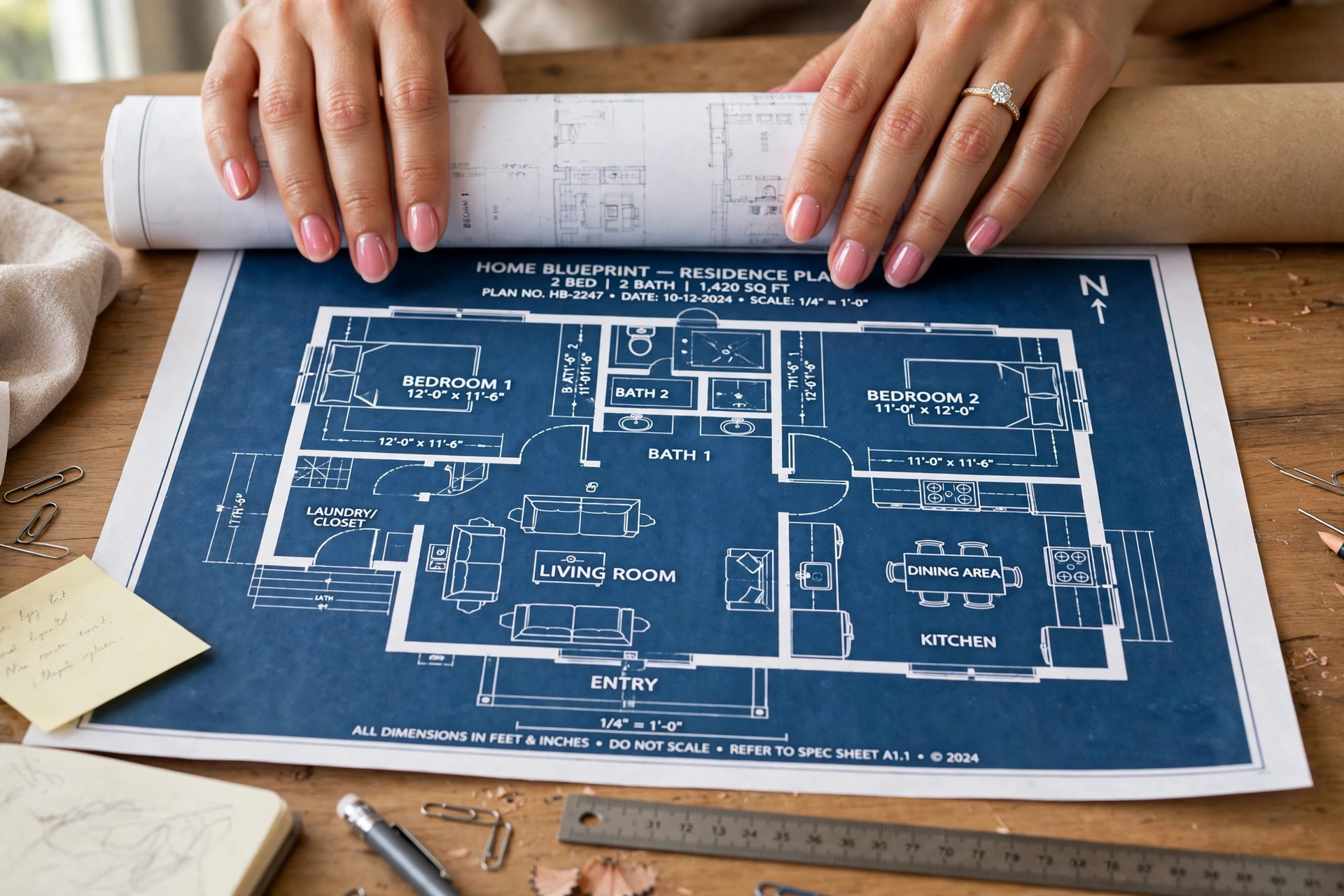
Today I want to talk to you about home improvements and how something like remodeling your bathroom can reduce your tax bill. Weird, right? Redo the landscaping in the backyard and get a reprieve from Uncle Sam.
It’s not unusual for me to work with a client that’s seen their home appreciate by 100% or more over the last 20 years (the S&P 500 total return is around 670%, but that’s a topic for a different week). Doubling the value of your home in two decades is amazing, but what do we do when we want to sell it? First, let’s talk about exclusions.
Suppose Homer and Marge purchased their home in 2006 for $1,000,000 and it’s worth $2,000,000 in 2026. If they’re married, the first $500k of profit is excluded from capital gains taxes. If Homer was single it would be the first $250k. This is part of what tax professionals call the Section 121 Exclusion. Great! We dodged capital gains taxes on $500,000! But what do we do with the remaining $500k of profit? Are we stuck paying taxes on that? Not necessarily.
Improvements add to the value of your home and prolong the useful life of the home. As a result, you can add the cost of these improvements to the basis of your property. Think of this as increasing the cost of what you paid in, reducing what is seen as profit. So what counts as an addition? For that we look to IRS Publication 523, Selling Your Home.
There are dozens of different improvements and replacements that can increase your basis. I’m happy to work with a CPA to help you go through these if you want, but a few of note are: Decks/patios, new HVACs, finishing a basement, driveway paving, window replacement, and bathroom/kitchen remodels.
What doesn’t count? Costs of repairs or maintenance that are necessary to keep your home in good condition, but don’t add value. Think of jobs like painting, fixing a leak (I’ve had plenty experience here!), filling holes or cracks, pest control, etc.
The action item here is if you own a home, save those receipts! Tracking home improvements can potentially save you thousands of dollars in cap gains taxes when it’s time to move. Even the small ones can add up over a few decades.
One last thing: run the details by your advisor and a tax professional before you implement anything here. The rules have nuances, and every situation is different. A quick review upfront beats an expensive surprise later.


